
🎞️ All of Us Strangers (2023):
Part 1: The Ghosts We Inherit Are the Ones We Serve…
A bit of a departure, this one. Although my aim is to revisit films from my past with a new lens, ‘film as reflection’ is the ultimate theme and I’ll often be revisiting recent films that have impacted me, or even new films that fit the mould of The Re:Cut.
All of Us Strangers isn’t just a film for me — it’s the ultimate mirror. This fragile, haunting meditation on identity, loneliness, and loss cracked something open that’s been quietly locked away for decades. I caught it on streaming, and it’s one of those films I instantly regretted not seeing on the big screen.
My dad’s death in 1987 was fast and brutal. Cancer — three months from diagnosis to goodbye. I was ten. Too young to understand the finality of it, but old enough to know that the world had shifted on its axis. His absence has been a kind of gravity ever since — an invisible pull I still orbit. I think it’s fair to say that his death has been the single most significant event of my life.
Every so often, grief sneaks up on me in unexpected ways. Like this past Father’s Day, watching my husband share an easy, wordless laugh with his own dad. Nothing profound — just a simple, domestic moment that hit me like a punch. I love my father-in-law, and I love how much he loves his son. And yet out of nowhere, I felt the sting of everything I’d missed: the jokes, the arguments, the quiet companionship of growing up alongside a parent who got to stay. The simple beauty in the evolution of the parent-child relationship.
But where the ache runs deepest isn’t in the missing — it’s in the not knowing. We’re frozen in time for each other, me and my dad: me, a sensitive ten-year-old boy he was raising alone; him, my safe harbour, my Skol-lager-and-Silk-Cut-scented saviour. My dad was funny, kind, a little mysterious — the kind of man who vanished to his pool league of an evening, and whispered into the phone to girlfriends he thought I didn’t know about. He was also the man who scolded me when I was cheeky, who kept me tethered when my imagination ran wild.
Sometimes I wonder if it’s easier to lose a parent when you’re young, before you really know them, or later, when the love is layered and complex. There’s no right answer. Losing him early spared me the friction that comes with growing up, but it also robbed me of the chance to meet him adult-to-adult — to see who he’d become, and to show him who I did. That sense of unfinished business has been a quiet companion all my life.
My sexuality was never a crisis for me internally. I knew I was different from early on — curious, sensitive, observant, expressive, always reading, always asking questions. Like my Nana, my dad encouraged it, bringing me endless books when he returned from work in the big city. By six, I was devouring Sue Townshend and James Herriot; by eight, it was Stephen King and Douglas Adams. Between these wildly age-inappropriate readings and my mornings at the NFI (Nana’s Film Institute), I was gaining a lens on life many kids simply don’t have. I didn’t fully understand who I was, but I understood enough to know it wasn’t something to share. ‘Poofter’ jokes were playground currency, the news spoke of perversion and contagion, there was a ‘correct’ way to be a ‘man’ — these things taught me to edit myself before I even knew the words for why.
So, I was largely spared the inner turmoil that many kids suffer, when they have feelings inside them that the entire world around them tells them are wrong. But there’s one night that will always stay with me. A moment that’s left its mark the way old televisions used to — an image burned so deep into the glass that even when the scene changed, part of it stayed behind. It was the moment the quiet understanding between who I was and who I could show myself to be completely collapsed.
I was sixteen, living with my auntie and uncle after my dad died. Mum was in my life, albeit at a distance. The abuse had stopped – even as an awkward teen I was still six feet tall – but too much had happened for me to want to live in that environment. My brother was away in the army. Life was good, on paper — a popular college kid, academically strong, a part-time job at a pizza place, and a secure home. Every Wednesday after work, I’d bring home a pizza for my auntie and me, and we’d sit on the sofa, watching late-night trash, sharing our week. We were close; so close, in fact, that when I was a kid I used to call her ‘Mum’ – much to the annoyance of my own mother, my auntie’s sister. My auntie couldn’t have children, and we’ve always shared a bond much closer than the word ‘aunt’ could suggest.
Until this one Wednesday.
I brought the pizza after my shift, as usual, and we switched on our late-night favourite – Prisone: Cell Block H. But the room felt… different. Still. Heavy. No casual chatter. One-word answers followed by silence and weighted stares. And what happened next has stayed with me ever since — the moment I stopped being just a nephew, or a student, or a boy with plans. The moment I became a secret exposed.
As I finished my last bite of pizza, she flicked the tv off and walked across the room with something in her hands that I couldn’t see. She then placed my dad’s photo on top of the television — one of those old, deep sets you could rest ornaments on — turned to me, and said, “Look him in the eyes. What would he think of you?”
The air vanished. My stomach dropped like the snow globe in Citizen Kane. Then the rising, dreadful crescendo of realization. She’d read my diary. She knew. What happened next was ugly and embarrassing for us both, and it damaged our relationship for years. My auntie was very much a product of her own education and environment; a deeply catholic working-class household in Northern England isn’t exactly a hotbed of progressive thinking. I’m grateful that these days, her thinking has evolved, and we are closer than ever.
But that question — What would he think of you? — echoed for years. It turned my dad’s memory from comfort into condemnation. Suddenly I wasn’t just grieving a father; I was defending myself to his ghost.
It wasn’t fair. My dad was, by every account, a kind, thoughtful, open man. A man who adored me. There’s no logical reason to believe he’d have rejected me. But logic doesn’t heal shame — time and truth do. And both took decades.
Aged 49, I still often vision the life we didn’t have — sharing pints over snooker, arguing about politics, fatherly relationship advice, riding rollercoasters (a passion I picked up from him). I imagine the look on his face when I finally told him I’m gay, knowing it would’ve been the soft, open kind. The one that says, “I always knew, son.” But that conversation lives only in my head, replayed in endless variations that all end with the same question: would he still be proud of me?
That night, I started to run. First from home, just for a few days. Then from confrontation, as I learned to shield parts of myself and tell the mistruths I needed to tell to survive. And then quite literally – a big city university, a gap year abroad, a year-long backpacking odyssey, and then the ultimate – a move to another continent. It’s only in recent years that this realisation has hit me – that I’ve been running from anything that might force me to revisit the weight of that question. And somewhere in that running, I became an adult who still hadn’t made peace with the version of my father that other people built for me.
So when All of Us Strangers came along — a film about grief, ghosts, and the people we never got to finish loving — it didn’t just hit close to home. It moved in.

Part 2: The Re:cut
To say I wasn’t prepared for All of Us Strangers on first watch is like saying the Wet Bandits weren’t prepared for Kevin McCallister. Talk about an iron to the face. I haven’t watched it since, although I’ve thought about it regularly. It affected me so deeply, I was almost hesitant to revisit it.
It wasn’t just that the film was sad — though it is, exquisitely so. It’s that it knew me. Knew my geography, my ghosts, my timeline. The film is set in the late 1980s in Northern England, and when I realized the boy in the story was eleven when his parents died, my breath caught. That’s how old I was. That’s my era. That’s my accent echoing through those walls. Even the wallpaper — those soft, sun-faded florals that seemed to exist only in homes that smelled faintly of chip fat and cigarettes — felt like an exhumed memory. In a scene that has now made me ugly-cry twice, Adam trims the Christmas tree with his parents as they sing along to ‘Always on My Mind’ by the Pet Shop Boys. That song was the Christmas number one in 1987 - five months after my Dad died. It was quite literally like watching a home movie.
For the uninitiated: All of Us Strangers follows Adam (Andrew Scott), a solitary writer living in a near-empty London tower block. It’s a fever-dream version of reality. After a chance encounter with his mysterious neighbour, Harry (Paul Mescal), Adam is drawn back to his childhood home — only to find his long-dead parents (Claire Foy and Jamie Bell) alive and waiting for him, frozen in time as they were the day they died. Harry becomes more than a neighbour; he’s a catalyst, a mirror, a living embodiment of the love Adam has long buried. Their tentative, charged connection forces Adam to confront his desires and the shame he’s carried for decades — the internalized homophobia that made him hide, censor, and run from who he truly is. As Adam navigates this strange, almost dreamlike reunion with his parents, he’s confronted with the collision of memory, longing, and forbidden love. The film moves between past and present, grief and yearning, asking what it would mean to finally be seen and loved for exactly who you are.
It’s a stunning achievement, a glorious example of all aspects of filmmaking coming together to create something incredibly meaningful. In a film where everything is top shelf, it’s those four central performances that make this work sing.
I spent much of the film half-watching, half-remembering. That strange in-between state where nostalgia and grief blur. Because All of Us Strangers isn’t just about loss — it’s about what we inherit from it. It’s about what we do with the ghosts we’re given.
As his affection for Harry grows, Adam returns to that suburban house over and over — the carpet flattened, woodchip on the walls, the air still heavy with the past — and sits down to talk to parents who never got to see him grow up. Finally getting to say the things that were left unsaid. It’s a fantasy that shouldn’t work, and yet it does, because the film never treats it like fantasy. The house, the light, the silences — they all hum with the kind of realism only memory can produce. The world doesn’t bend around Adam’s longing; it bends with it.
When he tells his parents he’s gay, the air barely shifts. No sermon, no tears. Just a quiet exhale — as if, across time, everyone involved finally unclenched. It’s one of the most emotionally intelligent coming-out scenes ever filmed. No grand revelation, just truth meeting love in the middle.
And watching it, I found myself whispering, that’s how it would’ve gone.
I’ve imagined that conversation a hundred different ways — my dad’s face in every version. Sometimes he laughs, sometimes he’s confused, sometimes he just reaches across the table and says, “I know.” Watching it play out on screen felt like stepping into one of my own daydreams, except this time, I didn’t have control of the ending.
And what struck me most wasn’t the heartbreak — it was the kindness. This wasn’t a story about shame or rejection. It was a story about release. About how sometimes, the only way to move forward is to let the past see you clearly, scars and all.
Adam’s parents aren’t there to absolve him — they’re there to witness him. That distinction felt seismic. Because that’s what I’ve always wanted: not forgiveness, not validation — just witness. For my Dad to say, I see you, and I still know who you are. Toward the end, when his father tells Adam “you were always a kind boy”, I cracked open. Because that’s it, isn’t it? That’s the voice I’ve been missing all these years. The one that clears out all the echoes of “What would he think of you?” and replaces them with something simple and true.
If anything, this second watch was even more impactful than the first. I was prepared for it this time, and ready to look closer at the lessons it was teaching me. As the credits rolled for the second time, it was like someone had gone into the attic of my memory and opened all the boxes I’d labelled “too heavy.”
What I love about the film is that it never tries to turn pain into purpose. It just sits with it. It understands that grief doesn’t end; it evolves. The dead keep changing, right alongside us. Maybe that’s the real haunting — not that they’re gone, but that they keep growing up with us, shaping every version of who we become.
I’m thinking again of the photo on top of the TV. The one where he’s holding up two fish he just caught, one of the only photos I have of him, and one that now gazes at me from the wall of my bathroom. I’m thinking about how long I’ve been trying to answer a question that was never really his to begin with. And I realized something quietly profound: he doesn’t need to know who I became. I do.
Maybe that’s the final kindness this film gives — permission to stop living in service of ghosts.
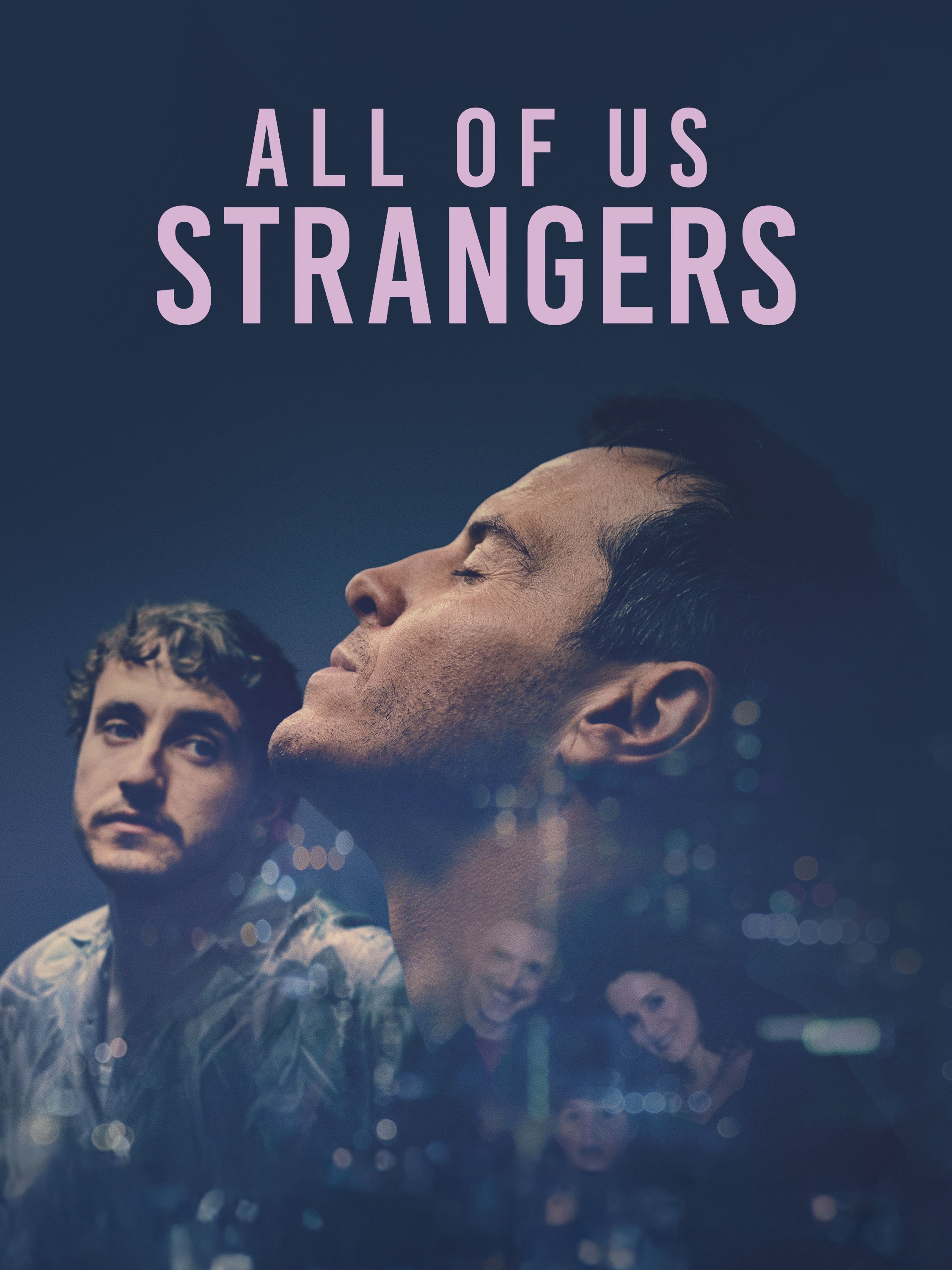
Starring: Andrew Scott, Paul Mescal, Claire Foy, Jamie Bell
Director: Andrew Haigh
🎬 Mise en Scène: Era Notes:
Year of Release: 2023
Studio: A24 / Altitude Films
Cultural Context: Post-COVID saw a raft of deeply reflective, introspective movies. A time when intimacy was hard, memory was unreliable, and nostalgia was escape.
Era Peers: Aftersun, Past Lives, Everything Everywhere All at Once, May/December
The Vibe: Softly haunted, lightly erotic, with a surreal sheen. Rooms, objects, even shadows carry emotional weight. Nothing is wasted; every glance tells a story.
Why It Matters: A beautiful and complex representation of queer love and queer identity.
🎬The Director’s Cut:
First Watch: At home, November 2023, with Cyril
Rewatch: At home, October 2025, alone
Scene that Still Gets Me: Always on My Mind by the Christmas tree
Will Be Remembered For: Being criminally overlooked during the 2024 awards season
Re:Cut Verdict: A walloping gut-punch of a film that whispers rather than shouts. All of Us Strangers doesn’t just show connection; it makes you feel the ache of it, the hidden, in-between moments that stick long after the credits roll.
